
Thoughts on the Great Pumpkin
Nostalgia, dreamy love ballads, and collective trauma

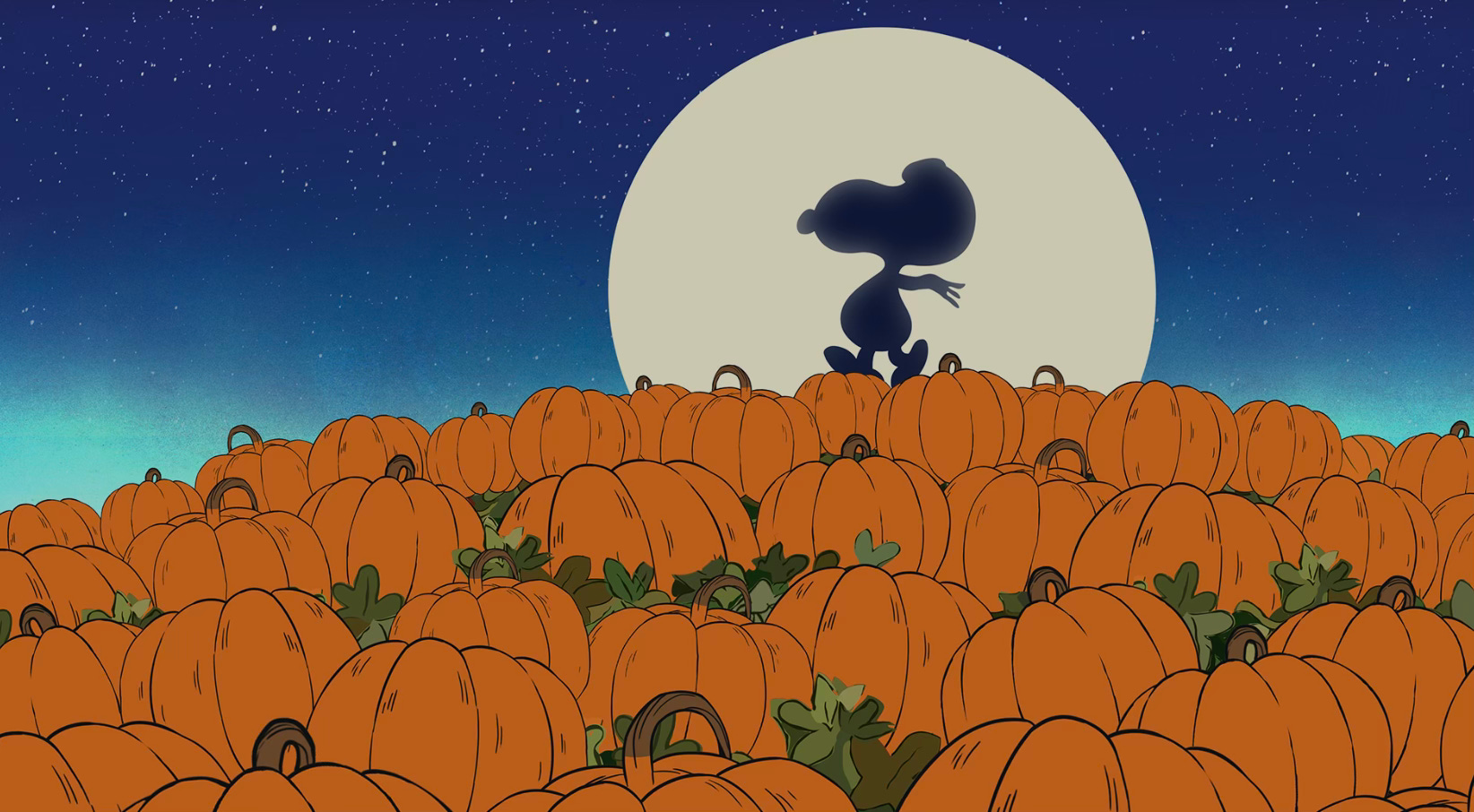
I just exposed my children to It’s the Great Pumpkin Charlie Brown and I have some misgivings.
Let me just preface this by saying that whenever I have the urge to share something with my kids that’s from my own childhood without previewing it first, there’s always a question in the back of my mind; what weird culture shadow is going to pop up that I forgot about but will probably be what they remember most?
The Great Pumpkin did not disappoint in this regard. You have probably seen the special: It’s the usual depressing Charlie Brown venue that weirdly breaks into a nostalgia fest for The Great War. We move suddenly from the anxieties of six year olds to images of occupied France and barbed wire. Then Snoopy’s doghouse gets totally shot up by artillery, as he imagines himself as a WWI fighter ace set against his arch nemesis The Red Baron.
So instead of getting my kids into the season of Halloween as I had hoped, I instead found myself explaining to them about the original western front and the weaponization of biplanes and the mechanics of trench warfare.
And then, in case there’s any doubt that this film is lionizing the Great War (and not WWII), Schroeder gets on the piano and starts with some really intense ballads from the era. At one point, Snoopy—the unflappable, capable and steady ace—breaks down completely, wailing in agony and loss.
Here’s the lyrics to the first stanza and chorus of that song, “There’s a long long trail a-winding,”
Nights are growing very lonely,
Days are very long;
I’m a-growing weary only
List’ning for your song.
Old remembrances are thronging
Thro’ my memory
Till it seems the world is full of dreams
Just to call you back to me.
Chorus:
There’s a long, long trail a-winding
Into the land of my dreams,
Where the nightingales are singing
And the white moon beams.
There’s a long, long night of waiting
Until my dreams all come true;
Till the day when I’ll be going down
That long, long trail with you.
I’ll just cut to the chase: Snoopy’s post-war trauma, and perhaps a long lost love, is the star of the show.
To think this was broadcast prime time in 1966, during the height of the Vietnam war. Half the TVs in America tuned in. Of course, there were only three networks back then, but how many stiff-lipped WWII veterans watched from their armchairs? How many aged WWI vets? According to the Nielsens, whatever they felt, they didn’t turn off the program. Schulz needed this win, because he was under tremendous commercial pressures to replicate the popularity of his Christmas special (which is also super depressing, BTW, and yet collectively we love it). In a moment of inspiration, Schulz leaned into Snoopy’s popularity, capturing the market with PTSD.
And until 2020, when Apple bought exclusive rights, the Charlie Brown Halloween special was broadcasted for free every year, reminding us all that the reason for the season is depression, disappointment and trauma.
One final thought—because shadow and trauma is inexhaustible—remember the last scene, when Linus and Sally are waiting for the Great Pumpkin? Linus’s disappointment is in crescendo, but then, a commanding figure shows up, rising in the moonlight as a shadow. Linus quivers in ecstasy, and then faints when Snoopy is revealed, in his fighter pilot guise.
I’m not sure what the original audience is to make of this. Clearly Shulz is tapping into his own war nostalgia/trauma, and he ropes everyone along, including all those families who have soldiers overseas in one of the most morally indefensible wars of the century. Meanwhile, the children are directed to identify with Linus, waiting for some false god that comes bearing treats, some kind of hybrid Santa Claus / Death figure. We’re told the Great Pumpkin never shows—that’s the theme of the whole show honestly, “expect less”—but actually, collective shadow is revealed. The child faints, and is left with a sort of numb disappointment. Charlie Brown himself remains unmoved, depressed and hollowed out, as usual.
To take it deeper, the setting of the pumpkin patch as a scene of revelation is full of an uniquely American nostalgia for mythical lost times, as the pumpkin is an indigenous cultivar that was widely adopted by pioneers and then shamed into association with poverty and want by the 17th century. Professor Cindy Ott suggests that despite the millennia long indigenous cultivation of this most useful and edible squash, our current wistful and nostalgic associations of pumpkins with farm life cemented in the late 1800s when the term became more of one of endearment. (Side note, after watching Gilded Age recently, I was inexplicably furious every time the character Aunt Eda intoned the name of her precious little dog “Pumpkin.” I found myself muttering to my wife “f*ckin Pumpkin.” Now I know why).
In conclusion, the shadow of indigenous trauma underpins this whole endeavor, the original American sin of colonialism, of a national identity built on the ashes of what was once a thriving continent of peoples that, according to indigenous archaeologist Roxanne Dunbar-Ortiz in her book An Indigenous people’s history of the United States, numbered in the range of 150 million people (three times the population of Europe in the 15thcentury).
This emotional undercurrent is part of the American psyche, a confused sense of shame mottled with longing for a deeper relationship to ancestry, landscape, and belonging.
Now you know why we are obsessed with pumpkins and why there’s a quantitative, material footprint of one variety or another of Cucurbita genus, the orange winter squash, dotting the yards and stuffed into pies across the US.
Wistful nostalgia, lost love, with an orange splash of generational collective trauma.
A hopeful note, I guess, is that the yearly pumpkin craze is pretty much propping up small scale family farms these days, producing 1.2 billion pounds of pumpkin a year.
Anyway kids, happy Halloween!
I’d love to know if you’ve seen this film recently, and how you felt afterwards? What did I miss?
One correction: Snoopy was not the Red Baron. He was literally The WWI Flying Ace and he was dogfighting the Red Baron.
I love the original Charlie Brown specials, but yeah, often depressing, or tearjerking (Lucy putting Linus to bed and covering him up? Jeez •bawls•).