

This substack is focused on the liminal space between materiality and psyche. Today, though, I am sticking to the material realm because certain humans in my government are threatening to destroy the protections of our historic and archaeological sites in the US. These places are not just repositories of history but active sacred grounds for indigenous peoples.
Just last month, one of the world’s oldest geoglyphs in Arizona was bulldozed for their shitty border wall.
This is after the same forces damaged 4000 year old petroglyphs in Big Bend, Texas in August. The vibrations of the heavy moving equipment caused rock defoliation and some of the rock art was destroyed in the process.
And back in July, native communities in Utah learned that their hard-fought protections for Bears Ears monument has been summarily dismissed. Thousands of archaeological sites will be trampled on so these 21st century robber barons can mine and deforest national land as they grift their way to exclusive tropically-located bunker futures.
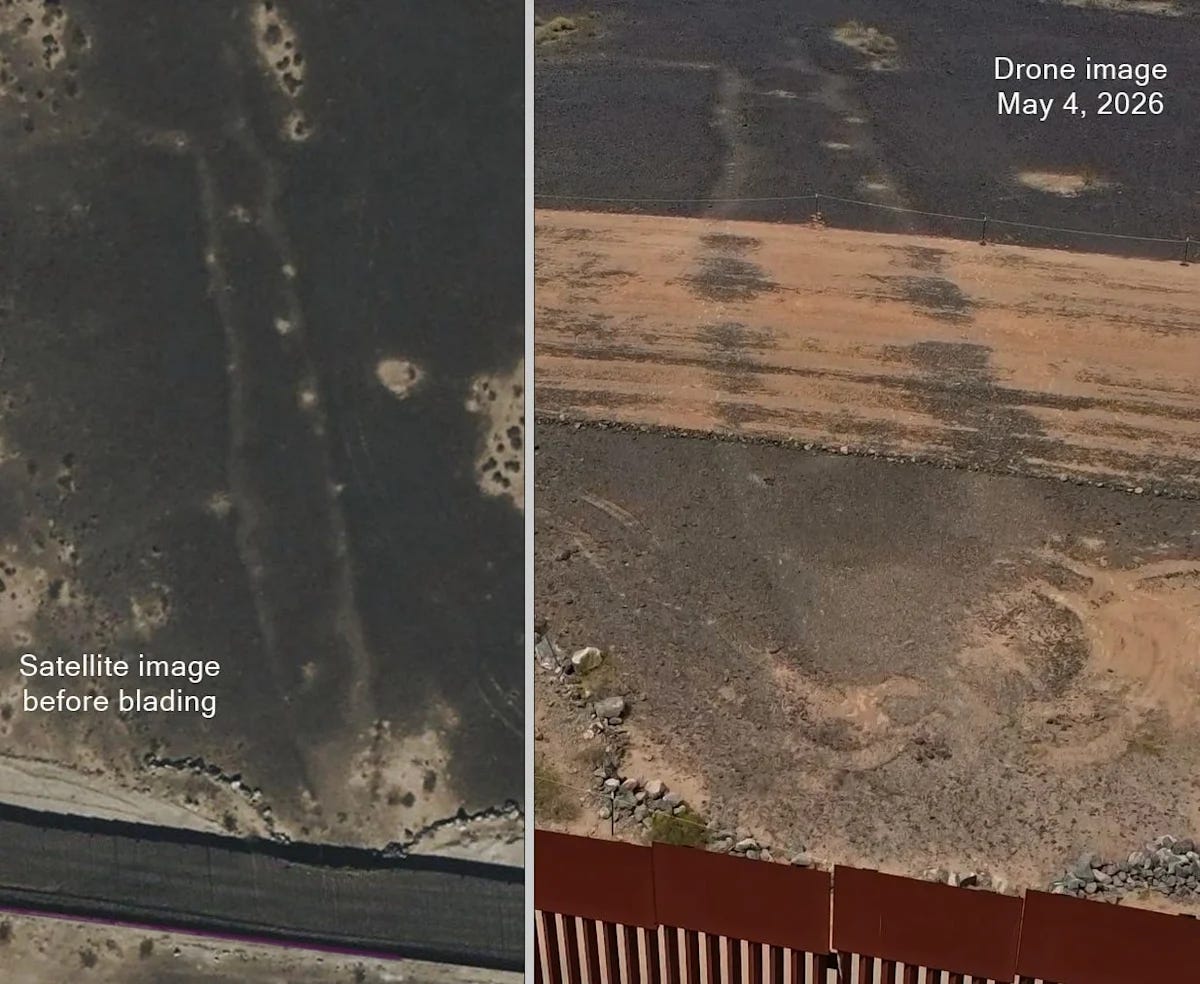
Those are just a couple high profile cases of the destruction of archaeological resources in the last few months by the current administration. They are many more. The changes are happening so fast that the damage will be done before the next election cycle. “Move fast and break things” started off as a coy Silicon valley catch phrase for Zucky incels, but now it’s government policy. And on November 9th they will vote to make this sort of thing legal: no cultural review before mining, logging, or building new roads. No funds for museums that teach real history. And no oversight, of course.
“It will only be a matter of time before the bones of someone’s ancestors in a lost cemetery or a Civil War battlefield are bulldozed into spoil piles” — Scot Keith, Senior Archaeologist at Southern Research, Pine Mountain, GA.
On top of this, if the feds succeed in dismantling the protections of historic and cultural resources, most working archaeologists and historic preservationists will also lose their livelihoods, because cultural resource management works mostly through compliance. Remember that historic cemetery I found that turned out to be remains of an enslaved community? That survey was paid for by the State of Alabama and you can bet your sweet tea that those kind of funds will dry up real fast if there’s not federal protections in place.
Yesterday, Scot Keith, an old friend and archaeological colleague of mine from the old days, who is now Senior Archaeologist at Southern Research, contacted me to share how high the stakes are for cultural resources in the US. He gave me permission to share this statement below:
The law/regulation that drives the industry I work in—historic preservation, Cultural Resource Management—was passed 60 years ago today. The National Historic Preservation Act was created after the country recognized that the ever-increasing development and growth was leading to the loss of many important historic sites. In a nutshell, Section 106 makes federal agencies involved in the permitting, funding, and/or licensing of a proposed activity consider the effects that activity may have on significant historic sites - both above-ground and archaeological - that are within the footprint of that proposed activity. Thus, historic and archaeological sites have to be found (via on-the-ground surveys) and evaluated for their significance prior to the activity being greenlighted. Now, Section 106 of this law is under attack and we have a limited time to fight back.
The law is being attacked on two fronts, both of which will essentially gut it. The Advisory Council on Historic Preservation has proposed revisions to it that will do so; their changes have to be placed on the Federal Register for public comment/input and they have not done that yet, supposedly after the midterm election.
An even more dire threat to Section 106 recently came about through the permitting reform bill in the Senate, which is S.5653. I think we can all agree that the process should be made more efficient and faster, but this guts the process and will lead to extremely negative outcomes for the significant historical sites and places across this country.
Just recently, I led a Section 106 survey where we found what we believe is the first location/site of Georgia’s oldest continuous-running Baptist Church—Kiokee Baptist Church—built in 1771. This was a Section 106 project and beforehand we had no idea of this site. After we found it via our archaeological survey, we learned that church historians had been searching and debating where it was for decades. If Section 106 of the NHPA [the National Historic Preservation Act] is gutted, this site would have never been found and it would have been razed and paved over as part of the road widening that spurred the survey. Now, we have found and protected a site that many people in GA and even many across our country would think is a very significant site, one that should be preserved because of what it means to people and what we can learn from it.
… If the proposed changes are successful, not only will it lead to the damage and destruction of important historic sites, historic preservation businesses like the one I work for will shut down and me and tens of thousands of others will lose our jobs. It will only be a matter of time before the bones of someone’s ancestors in a lost cemetery or a Civil War battlefield are bulldozed into spoil piles because Section 106 is gutted, and that is not an exaggeration, it will inevitably happen.
What can we do?
Here’s a couple easy call-to actions recommended by Scot:
Contact your Senators to ask them to vote against the permitting reform bill - S.5653. The vote is scheduled for Nov. 9.
Reach out to your local historical societies to let them know so they can lend their voices. They would be frickin delighted to hear from you.
Contact your state legislators to ask them to act.
Additional learning resources
106 Strong — a fabulous educational site with easy ways to help, and a documentary too
National Trust for Historic Preservation — another org with clear directives for pitching in
Good article on how historic preservation works in the US
Statement from the five tribal nations at Bears Ears National Monument
First America — this powerful podcast showcases how the current US political moment is rooted in USA’s deep history around the treatment of —and influence of — indigenous peoples.
Gosh Ryan, I can't really like this post at it's not a all good news..bad in fact. We'll dire in reality. It sounds like a tough time to be an archaeologist .
Sorry, I meant you have my full support.